
What Is a Lender Form? A Practical Guide to Clearer Intake
Define the purpose, questions, and next steps before turning a lending conversation into a form.
Read articleGood lending experiences start with clearer questions. Explore practical guides to applications, online documents, website embeds, and thoughtful AI assistance.
An independent learning resource. No applications, accounts, or personal documents collected here.
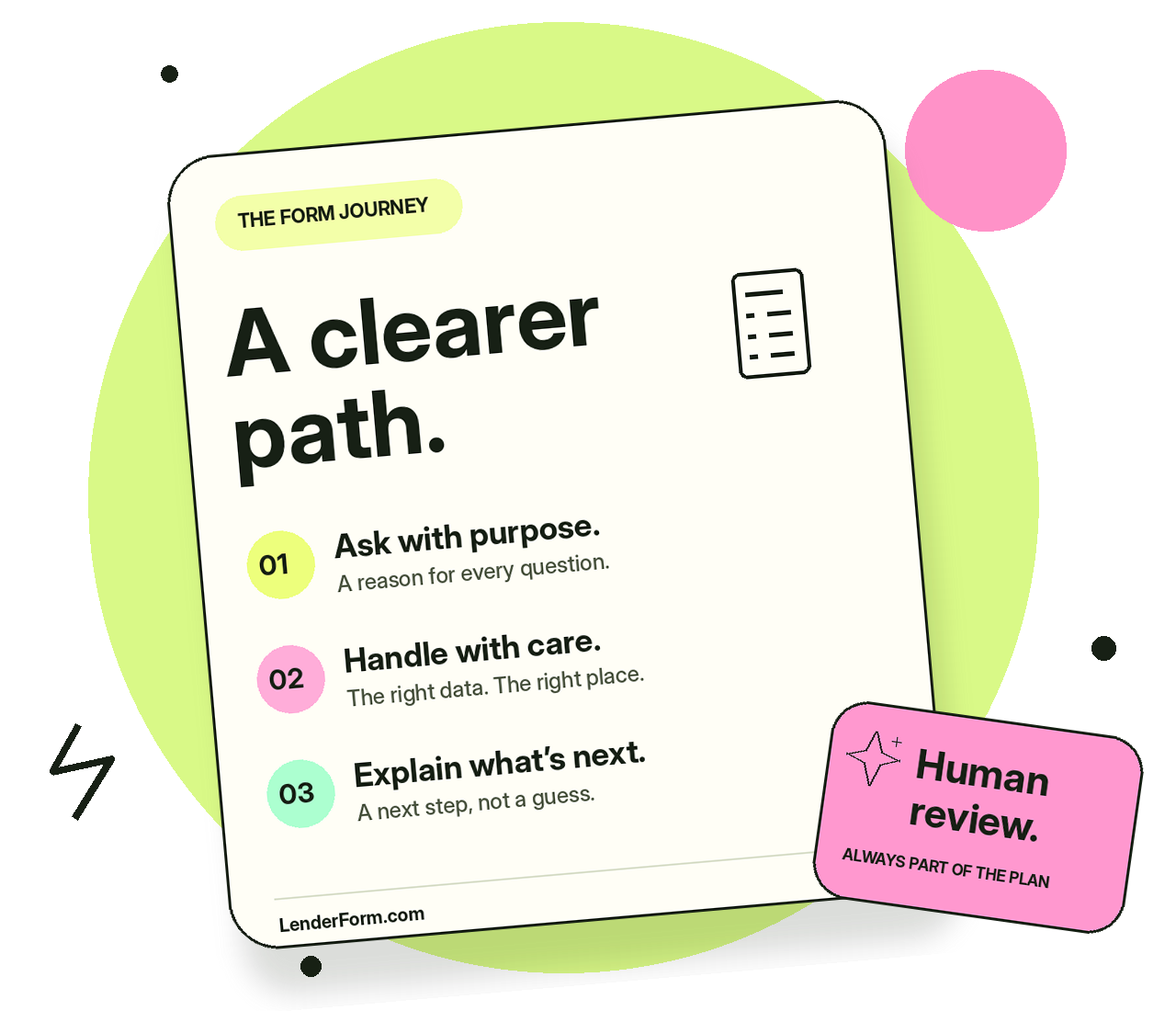
From a first inquiry to a document handoff, understand what each form is for—and what it should not promise.
Understand the purpose, audience, and boundaries of a lending form.
Explore the guidePlan applicant details, instructions, documents, and review steps.
Explore the guideDistinguish inquiries, applications, disclosures, and agreements.
Explore the guideCompare integration approaches and plan a dependable handoff.
Explore the guideOrganize document requests, review states, access, and retention.
Explore the guideEvaluate AI assistance without confusing extraction with verification.
Explore the guideFocus on issuer applications, clear questions, and product context.
Explore the guideUnderstand application stages, Form 1003, and property information.
Explore the guideKeep introductions, permissions, and lender applications distinct.
Explore the guideA form is one part of a larger conversation. Start by defining its purpose, the information it needs, and the action that follows.
Use the guides to build a shared brief for the people writing, reviewing, and implementing the experience.
Is this an inquiry, an application, a document request, or a referral? Name the actual step.
Explain the questions, their context, and who is responsible for receiving the answers.
Separate receipt, review, and decision. Describe what happens without promising an outcome.
Different teams share the journey. Each needs a clear view of its role.
Define the collection stage, use consistent financial labels, and make review responsibilities visible before adding questions.
Plan an applicationConnect property details, official application resources, and supporting documents with a clearly explained sequence.
Explore mortgage formsExplain an introduction without blurring the line between property coordination and a lender’s financial assessment.
Clarify the handoffCompare integration approaches, establish the application destination, and give visitors a practical fallback.
Understand embeddingsExplore a more precise conversation about AI: a defined task, a visible source, a reviewer who can correct the result, and a fallback when something goes wrong.
Assistance with a document is not verification of its contents or a lending decision.
Go beyond the overview with step-by-step thinking for clearer lending workflows.
Define the purpose, questions, and next steps before turning a lending conversation into a form.
Read article
Compare hosted links, inline frames, and scripts—and plan the responsibilities behind each option.
Read article
Bound the task, preserve source evidence, test errors, and make human review more than a checkbox.
Read articleWhat these resources cover, how to use them, and where to go next.
Have a content question? →LenderForm.com is a library of practical guides to lending forms, documents, website integrations, and related workflows. It helps teams plan clearer experiences; it does not operate a lending or application service.
No. There are no application forms, account registrations, document uploads, or borrower-data collection on this site. Applications belong with the lender or authorized application operator you choose.
The website embed guide explains integration choices and questions to ask a provider. This site does not provide a live form endpoint or a hosted application product. Start with the website embed lending form guide.
The general workflow discussions are written for a global audience. United States document and regulatory examples are labeled in the relevant guides. They are not a substitute for checking the requirements of your product and jurisdiction.
The AI guides focus on bounded assistance, such as drafting wording or organizing documents, with source evidence and review. They do not offer automated lending decisions or promise an application outcome. Explore the AI lending form guide.
Email [email protected] with the page address and a description of your suggestion. Please do not send applications, identity documents, account numbers, or other sensitive financial information.
Explore the guides or start a conversation about the content.